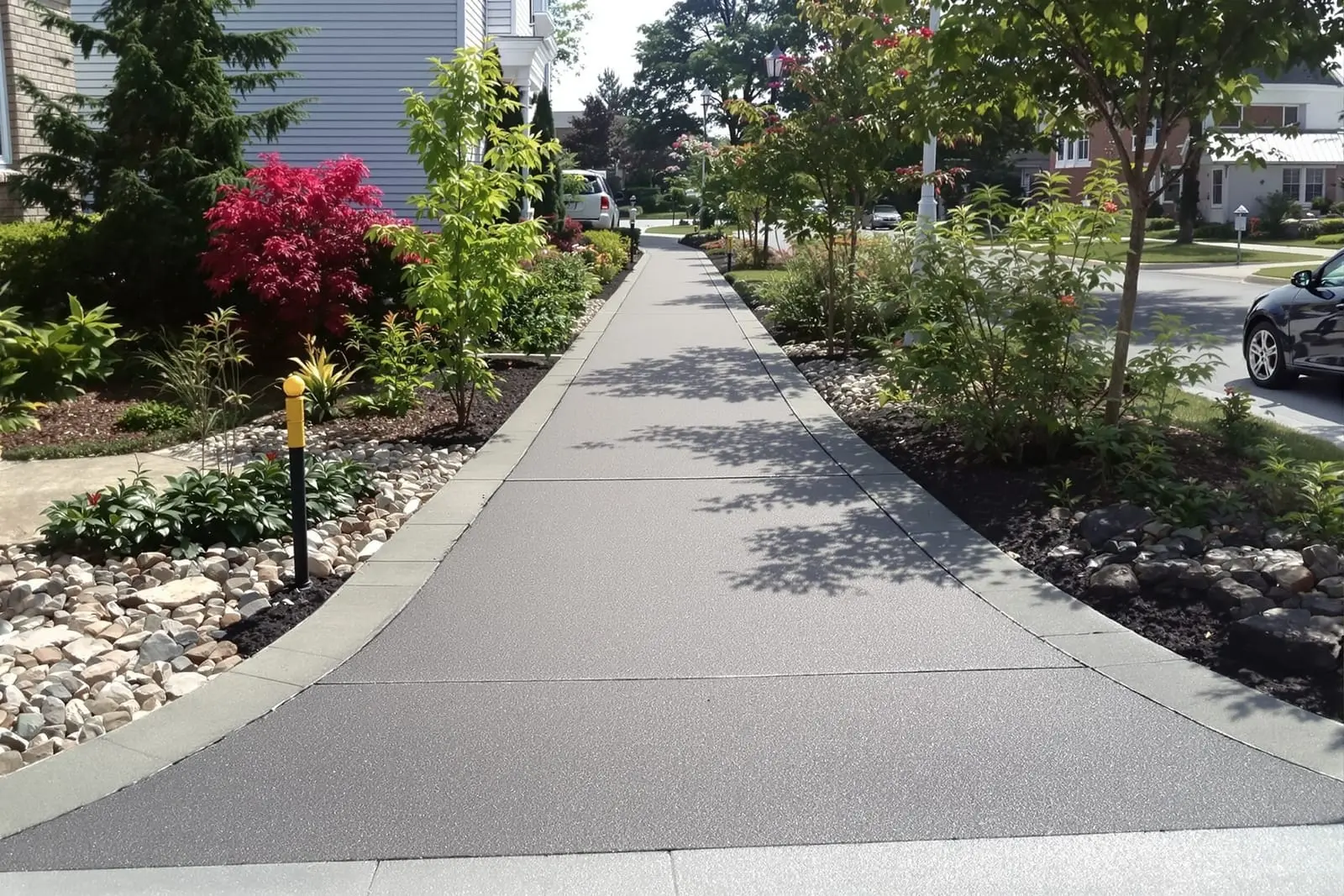
Create safe, accessible routes with asphalt sidewalks and trails in Denton, TX. We pave walking paths for campuses, parks, and commercial properties with smooth, consistent surfaces. Our team handles layout, grading, and compaction to deliver comfortable pathways for pedestrians and cyclists.
Prestige Asphalt Denton provides professional asphalt sidewalks throughout Denton, TX and the surrounding area. Our licensed, insured crew delivers safe, clean, on-time work with a free estimate before anything begins. Call (940) 240-6178 or request your free quote.
Asphalt sidewalks, pathways, and trails built for Denton use
Asphalt sidewalks and walking paths live a hard life in Denton. They bake in summer heat, take on sudden thunderstorms, and see constant foot traffic, strollers, bikes, and sometimes maintenance vehicles. Prestige Asphalt Denton designs and builds asphalt sidewalks, pathways, and trails to handle all of that without turning into a cracked, puddled mess.
When we look at a new pathway project, we start with how people will actually use it. A sidewalk along a Denton neighborhood street needs different thickness and layout than a shared-use trail in a park or a shortcut path to the back parking lot of a business. We look at expected traffic, drainage patterns, nearby trees, and how the surface will be plowed or cleaned. Then we match those needs with the right asphalt mix, base design, and edge support so the path holds up for years instead of just a few seasons.
Because our work is local, we pay attention to Denton clay soils that swell when they get wet and shrink when they dry out. That movement can ruin a pathway if it is not built correctly. We plan for that from the start with base depth, compaction targets, and drainage that suit this part of North Texas instead of using a one-size-fits-all plan pulled from another region.
How we actually build asphalt sidewalks, pathways, and trails
Every project Prestige Asphalt Denton takes on follows a clear process so you know what is happening on your property and why.
First, we survey and stake the route. On residential sidewalks this might be as simple as marking a straight line along the property frontage. On winding park or HOA trails, we walk the route with you, flag curves, check for standing water spots after a rain if possible, and confirm tie-in points at streets, parking lots, and existing walks.
Next, we handle excavation and grading. We strip grass or old concrete/asphalt, remove soft or organic soil, and cut to the planned depth. For typical pedestrian-only sidewalks, we often build a total structure (base plus asphalt) of 4 to 6 inches. For multi-use trails that may see golf carts or light service vehicles, we increase that structure and sometimes widen the base beyond the paved width for added edge support.
Then we build the base. In Denton we commonly use crushed limestone or flex base, placed in lifts and compacted to a specified density using plate compactors and rollers. Good base is what keeps asphalt sidewalks from settling, so we take our time here. We shape a slight crown or cross-slope, normally 1.5 to 2 percent, so water sheds off instead of pooling.
After the base is approved, we place hot mix asphalt. For sidewalks and trails we usually use a fine-graded mix that provides a smoother walking surface without large aggregate popouts. The asphalt is delivered hot, spread by machine or by hand on smaller jobs, then compacted with steel drum and rubber tire rollers to achieve a tight, even surface. We check for low spots and correct them while the mix is still workable.
Finally, we finish the edges and transitions. Edges can be left with compacted native soil, wrapped with base material, or confined with concrete or metal edging depending on your budget and landscape plan. Transitions at driveways, curbs, and ramps are smoothed so wheelchairs, scooters, and strollers roll without catching.
Design options, accessibility, and appearance
Asphalt sidewalks and trails do not all have to look the same. Prestige Asphalt Denton offers choices so the finished path fits the property instead of looking like an afterthought.
Width is the first design decision. A basic residential sidewalk might be 4 feet wide, which works for single-file walking. If you want two people to walk comfortably side by side or you expect bike traffic, 5 to 8 feet is more realistic. In parks or commercial areas where maintenance carts or emergency vehicles might use the trail, we may recommend 8 to 10 feet and thicker asphalt to handle the extra load.
We also focus on accessibility. If you want the sidewalk or trail to be ADA friendly, we design slopes, ramps, and crosswalk tie-ins with that in mind. That includes limiting cross-slope, providing smooth transitions at driveways, and avoiding abrupt grade changes that trip people or cause issues for wheelchairs and walkers. We can add textured terminations where asphalt pathways meet streets or parking areas so visually impaired users can feel the transition.
From an appearance standpoint, most sidewalks use standard black asphalt, which fades to dark gray over time. For higher profile projects like community trails or around campuses, we can discuss colored seal coats or striping to separate pedestrian and bike lanes. We also pay attention to curves and alignments. Gentle curves are easier to walk and maintain, and they handle better for bikes and strollers than sharp bends.
Lighting, landscaping, and signage are usually handled by others, but we coordinate path location and edge conditions so those trades have something solid to work with. For example, we can widen paved pads at bench locations or create small spurs off the main trail to trash cans or dog stations so the main walkway remains clear.
Local conditions, timing, and what affects cost in Denton
North Texas weather has a big say in how and when asphalt sidewalks should be built. Prestige Asphalt Denton schedules work around Denton heat and storm patterns so you get a better product.
We prefer to pave when surface temperatures are not extreme. In peak summer, the mix can set very fast, so we adjust crew size and compaction timing to keep a consistent finish. In cooler months, we watch the forecast closely. If a strong cold front or heavy rain is due, we will hold off. Putting asphalt down on a wet or muddy base is a recipe for early failure.
Costs for asphalt sidewalks and trails depend on several practical factors. Length and width are obvious, but the biggest driver is usually base work. If your soil is very soft, if there are tree roots to remove, or if we have to haul off a lot of old material, that adds to the job. Curves and layout complexity also matter. A straight residential sidewalk is more efficient to build than a twisting trail through trees.
Access can change pricing too. If we can bring trucks and a roller close to the work area, we keep costs down. If the path runs behind homes, through narrow gates, or in a tight courtyard, we may need smaller equipment and more hand work. That takes longer and shows up in the estimate.
We give written proposals that explain what base depth we are including, the asphalt thickness, and any drainage improvements such as small swales or tie-ins to existing inlets. That way you can compare quotes fairly instead of looking at only a per-foot price. A cheaper bid that skimps on base or thickness may look good now but usually costs more in repairs within a few years.
Maintenance, repairs, and how to get the longest life
Asphalt sidewalks, pathways, and trails do not need a lot of attention, but a little smart maintenance goes a long way. Prestige Asphalt Denton helps property owners set up a simple plan so these surfaces stay safe and good looking.
In the first year, the main task is keeping heavy vehicles off the new asphalt unless it was specifically built for that loading. The surface is still curing and can rut under point loads from parked trucks or dumpsters. We also suggest clearing leaves and dirt from the edges so water does not sit against the pavement and soften the shoulder.
Over time, the two most common issues on Denton pathways are edge cracking and tree root heave. Edge cracking shows up when soil at the side erodes away and the asphalt loses support. We fix this by cutting back to solid pavement, rebuilding the base, and patching, then improving edge support with base, rock, or curbing so it does not repeat. Tree root heave raises sections and creates trip hazards. Depending on the situation, we can either remove offending roots with an arborist involved or adjust the path alignment slightly and rebuild that section.
Sealcoating can help extend the life of asphalt sidewalks and trails, especially in full sun. We usually recommend waiting at least 6 to 12 months after installation so the asphalt can cure, then evaluating whether a sealer makes sense based on traffic and appearance goals. For long community trails or campus systems, we can set up a rotation so different segments are addressed in phases.
If your existing asphalt sidewalk or trail has potholes, standing water, or sections that keep crumbling, we can inspect and tell you honestly whether it is worth spot repairs or if a mill-and-overlay or full rebuild is smarter. Our goal is to match the fix to how you use the path and how long you need it to last, not just sell the biggest job. For many Denton properties, a mix of targeted base repairs, patching, and a fresh surface course is enough to get many more years out of the existing layout.
“
Professional asphalt pathways, sidewalks, and trails, done right the first time, quality materials, honest pricing, and results that last.
Prestige Asphalt Denton
Asphalt Pathways, Sidewalks, and Trails Across Our Service Area