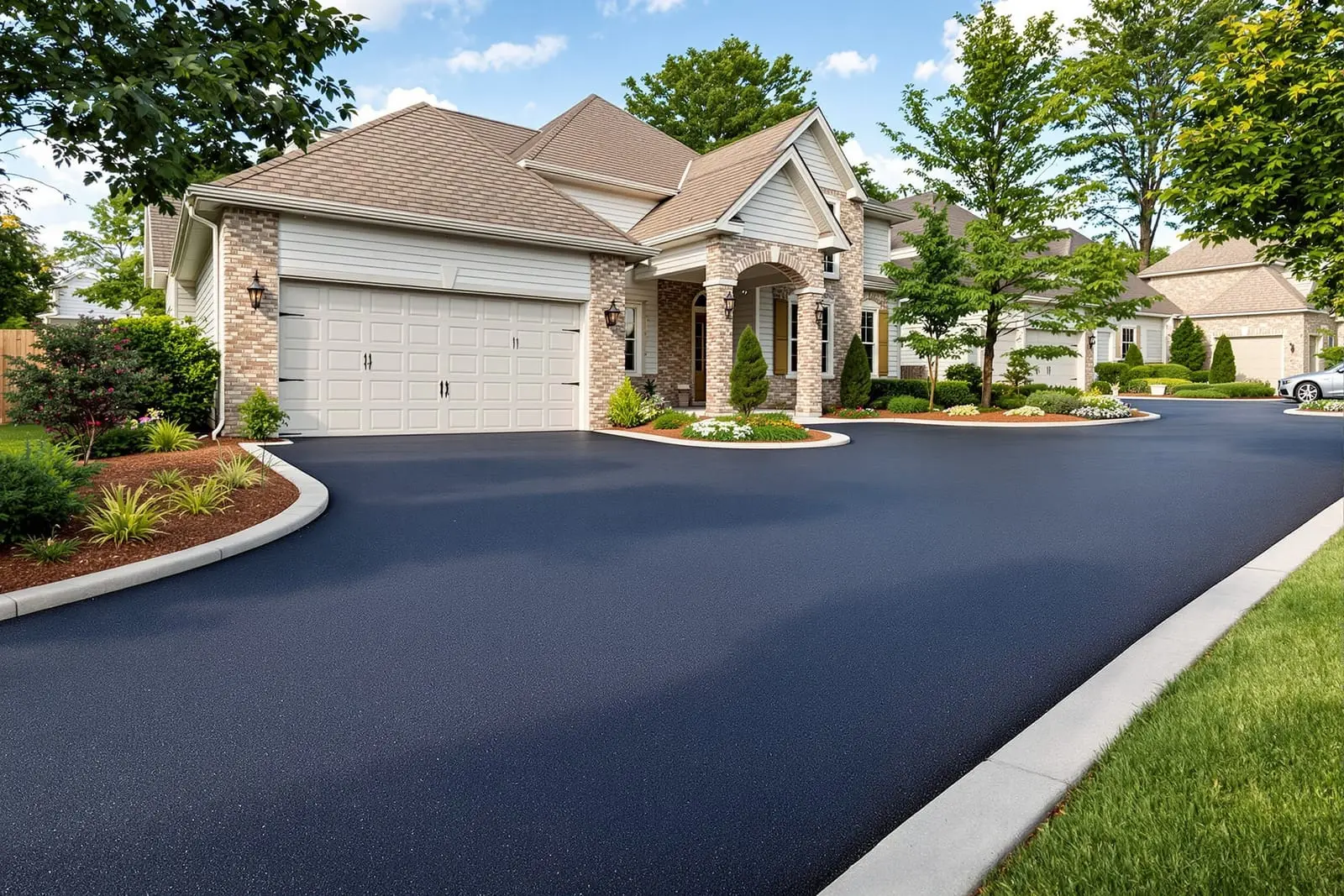
Handle demanding traffic with industrial asphalt paving in Denton, TX. We design and install heavy duty asphalt sections for truck courts, loading docks, and equipment areas. Our crew uses proper base depth, compaction, and mix design so your pavement stands up to heavy loads and constant use.
Prestige Asphalt Denton provides professional industrial asphalt paving throughout Denton, TX and the surrounding area. Our licensed, insured crew delivers safe, clean, on-time work with a free estimate before anything begins. Call (940) 240-6178 or request your free quote.
Industrial Asphalt Paving for Denton’s Toughest Sites
Industrial asphalt paving in Denton is very different from paving a driveway or small parking lot. Heavy trucks, forklifts, and loaded trailers put constant pressure on the surface, and summer heat can soften weak mixes. Prestige Asphalt Denton focuses on thick, high-strength industrial sections that match the specific traffic and loading patterns on your site.
We routinely design and build pavements for warehouses along I-35, equipment yards near the rail lines, and plants in the Denton Industrial Park. Before we quote anything, we walk the property with you, map truck routes and loading zones, and note drainage patterns and existing soil conditions. That way, the asphalt system is tailored to how your operation actually runs instead of relying on a generic “industrial” spec.
Our goal is simple: create a surface that stays stable under heavy use, sheds water quickly during Denton storms, and can be repaired in sections without shutting your whole operation down.
Site Assessment, Soil Testing, and Base Construction
Heavy-duty asphalt only performs as well as the base under it. In Denton’s mixed soils, we see everything from firm sandy loam to expansive clay in the same property. Prestige Asphalt Denton starts industrial paving projects with a detailed site assessment that may include proof rolling, test pits, and, for new builds or problem areas, lab soil testing.
If we find soft or clay-heavy areas, we typically undercut and replace them with crushed limestone base or stabilized material. On industrial work we are rarely comfortable with less than 6 to 8 inches of compacted base in light-duty areas and 10 to 12 inches in loading and dumpster zones. We compact in thin lifts using vibratory rollers and verify density with a nuclear gauge or proof roll until the base does not rut under a loaded truck.
We also design drainage from the ground up. That includes setting base grades toward inlets or swales, using French drains where runoff concentrates, and avoiding flat spots where diesel, oil, and water can sit and soften the asphalt. Getting the base and drainage right is the single biggest factor in how long your industrial pavement lasts.
Designing Heavy-Duty Asphalt Sections for Industrial Loads
A key difference with industrial asphalt paving is the thickness and structure of the asphalt layers. Prestige Asphalt Denton designs pavement sections based on expected loads, such as daily 18-wheelers, forklift traffic, or occasional lowboy trailers. For light truck parking we may recommend 3 to 4 inches total asphalt on a thick base. For truck lanes and loading docks, we often move to 5 to 7 inches of asphalt, placed in multiple lifts.
We typically use a stiffer, coarse-graded base asphalt for the lower lifts, then a tighter, finer surface mix on top for a smoother, more fuel-resistant finish. In dumpster pads, fuel islands, and areas where trucks turn sharply, we may convert to full-depth asphalt with additional thickness, or we may recommend reinforced concrete pads tied into the asphalt so rutting does not appear where trucks pivot and stand.
We also look at subgrade support, expected moisture, and any planned future building expansions. In Denton’s growing industrial corridors, many facilities expand within a few years. We can design a pavement cross-section that can be tied into or thickened later instead of forcing you to tear out large sections when you add docks or buildings.
Materials, Mix Options, and Fuel Resistance
Not every asphalt mix is appropriate for industrial service. Prestige Asphalt Denton works with local Denton and DFW area plants to specify mixes with the right aggregate size, binder grade, and stability for heavy traffic. For example, we commonly use higher-stability base mixes under surface courses in truck lanes so the pavement does not shove or ripple at stopping points.
In areas where diesel spills and oil leaks are common, such as loading docks and maintenance bays, we can recommend dense-graded surface mixes that resist fuel penetration better than open or coarse finishes. We may also apply a specialty sealer that is more chemically resistant than basic parking lot sealcoat. This helps prevent the top layer from softening and raveling due to constant exposure to fluids.
We also consider Denton’s summer temperatures when we choose asphalt binder grades. Hot pavement plus heavy truck traffic can cause rutting if the binder is too soft. Our industrial designs use binder grades that stay stable in extended heat waves, which protects the structure you are investing in.
Installation Process and How We Minimize Operational Disruption
Industrial and heavy-duty asphalt paving often happens at active facilities that cannot shut down for long. Prestige Asphalt Denton plans the work in phases so you can keep trucks and crews moving. Before construction, we meet with your site manager to identify critical access points, shipping schedules, and no-go areas such as emergency routes.
A typical construction sequence includes milling or demolition of failed pavement, subgrade proofing and repair, base installation and compaction, tack coat application for bonding between layers, asphalt placement in lifts, and final compaction. For very heavy-duty areas we may pave in two or three asphalt lifts so each course can be compacted thoroughly. This results in fewer internal voids and reduces the risk of premature cracking.
We schedule high-impact tasks like milling, base proof rolling, and the heaviest paving passes during slower times at your facility whenever possible. Truck routes may be temporarily shifted, but we plan that with you so shipping and receiving can continue. At the end of each shift, we leave clean, safe transitions so forklifts and trucks can cross without sharp edges or drop-offs.
Permits, Drainage, and Compliance in Denton, TX
Industrial paving in Denton must fit local regulations, stormwater rules, and, in some areas, business park covenants. On larger projects inside the city limits, you may need grading or paving permits, and the design may have to satisfy Denton’s stormwater management standards. Prestige Asphalt Denton coordinates with your engineer or can work within approved civil plans to make sure paving elevations and slopes match the drainage design.
If your site connects to public streets, we pay special attention to driveway tie-ins, required curb types, and sight distance near entrances. In certain industrial parks, there are standards for heavy-truck routes, fire lane markings, and minimum pavement widths. We work within these requirements so you avoid problems at final inspection or when you seek a certificate of occupancy.
We also understand how industrial paving interacts with utilities. We protect valve covers, manholes, and utility boxes during paving, then adjust them to final grade using collars or risers. This prevents the common problem of sunken lids in truck lanes, which can become a maintenance headache and a safety issue if not handled correctly.
Costs, Lifespan, and Maintenance Planning for Industrial Pavements
Cost for industrial asphalt paving in Denton is driven mainly by three factors: thickness and mix design, base preparation, and site complexity. Thick, multi-lift asphalt sections over deep base cost more up front but are usually the only sensible choice where loaded semis and equipment operate daily. Trying to save money by cutting thickness almost always leads to rutting, alligator cracking, and constant patching.
Prestige Asphalt Denton is upfront about where you can and cannot trim scope. For example, you may be able to use a lighter section in employee parking and concentrate the heavy-duty design on truck routes and loading zones. We can break out the project into phases or areas so you can budget work over several fiscal years without compromising structural integrity in critical zones.
We also discuss maintenance from the start. For industrial pavements, this often means scheduled crack sealing to keep water out of the base, selective sealcoating where appropriate, and early patching of any isolated failures before they spread. In high-wear dock areas, we sometimes design in sacrificial surface lifts that can be milled and replaced after many years while leaving the base and lower asphalt courses intact. With the right structure and a simple maintenance plan, it is realistic for a well-built industrial pavement in Denton to serve 20 or more years under heavy use.
If you are planning a new facility or upgrading an older yard, our team can walk your site, review your traffic patterns, and prepare a practical, phased plan for industrial asphalt paving that fits both your operational needs and your budget.
“
Professional industrial and heavy-duty asphalt paving, done right the first time, quality materials, honest pricing, and results that last.
Prestige Asphalt Denton
Industrial and Heavy-Duty Asphalt Paving Across Our Service Area